
Construction industry
Construction & Infrastructure
Release time 2020-10-13 08:57 page views
In the construction industry, bolts are fundamental load-transferring components that ensure the integrity, stability, and safety of structures. Their performance is critical from the foundation to the rooftop, demanding unparalleled strength, durability, and precision.
From a structural and functional perspective, bolts are essential for creating reliable connections. Anchor bolts are the first point of contact, securely embedding steel columns or heavy machinery into concrete foundations. In steel-framed structures, high-strength structural bolts (e.g., ASTM A325/A490) connect beams, girders, and trusses, forming the skeleton that resists gravity, wind, and seismic forces. These connections often utilize specific pretensioning or torque-control methods to achieve the required clamp force, ensuring the joint behaves as a single, monolithic unit under load.
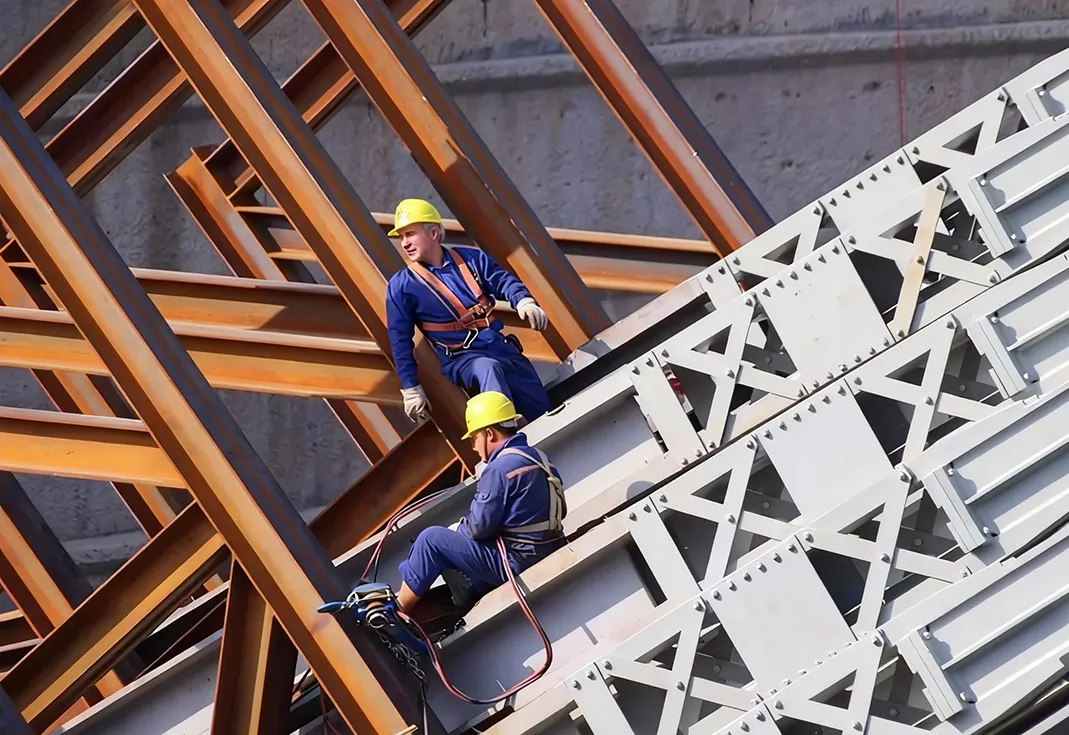
From a safety and longevity angle, the failure of a structural connection is not an option. Bolts must exhibit exceptional shear and tensile strength, fatigue resistance, and long-term load retention in often harsh environments. This makes corrosion protection paramount. Hot-dip galvanizing (HDG) and other advanced coatings are standard to combat corrosion from weather, chemical exposure, or coastal salt spray, safeguarding the structure for decades.
From a materials and engineering standpoint, selection is dictated by the application's demands. Carbon steel and alloy steel bolts dominate primary structural work for their high strength-to-cost ratio. In corrosive environments or for specific architectural needs, stainless-steel (e.g., 304, 316) bolts are employed. Furthermore, specialized bolts like wedge anchors, chemical anchors, and through-bolts are engineered for distinct substrate conditions and load requirements in concrete, masonry, or retrofit applications.

Finally, from a standards and compliance view, construction is governed by some of the most rigorous codes and specifications globally, such as ASTM International (USA), AISC standards, Eurocodes (EN), and local building codes. Every bolt used in a critical application must have traceable mill certificates and proof of compliance with these exacting standards for material properties, dimensions, and performance. This ensures uniformity, predictability, and safety in construction practices worldwide.
In essence, in construction, bolts are the silent guardians of structural safety. At APEX, we manufacture fasteners that meet these profound responsibilities, delivering the certified strength, engineered durability, and unwavering reliability upon which sound structures—and public trust—are built.
